ABOUT VINE

Measurement solutions built on an understanding of optics, algorithms, and software.

Since 2011, VINE has built experience in thin-film measurement, modular spectrometry, optical fibers and probes, and related measurement software.

We develop practical products and measurement workflows by considering the complete process—from selectable wavelength-region light sources and wavelength-dependent reflectance spectra to data analysis and thickness results.

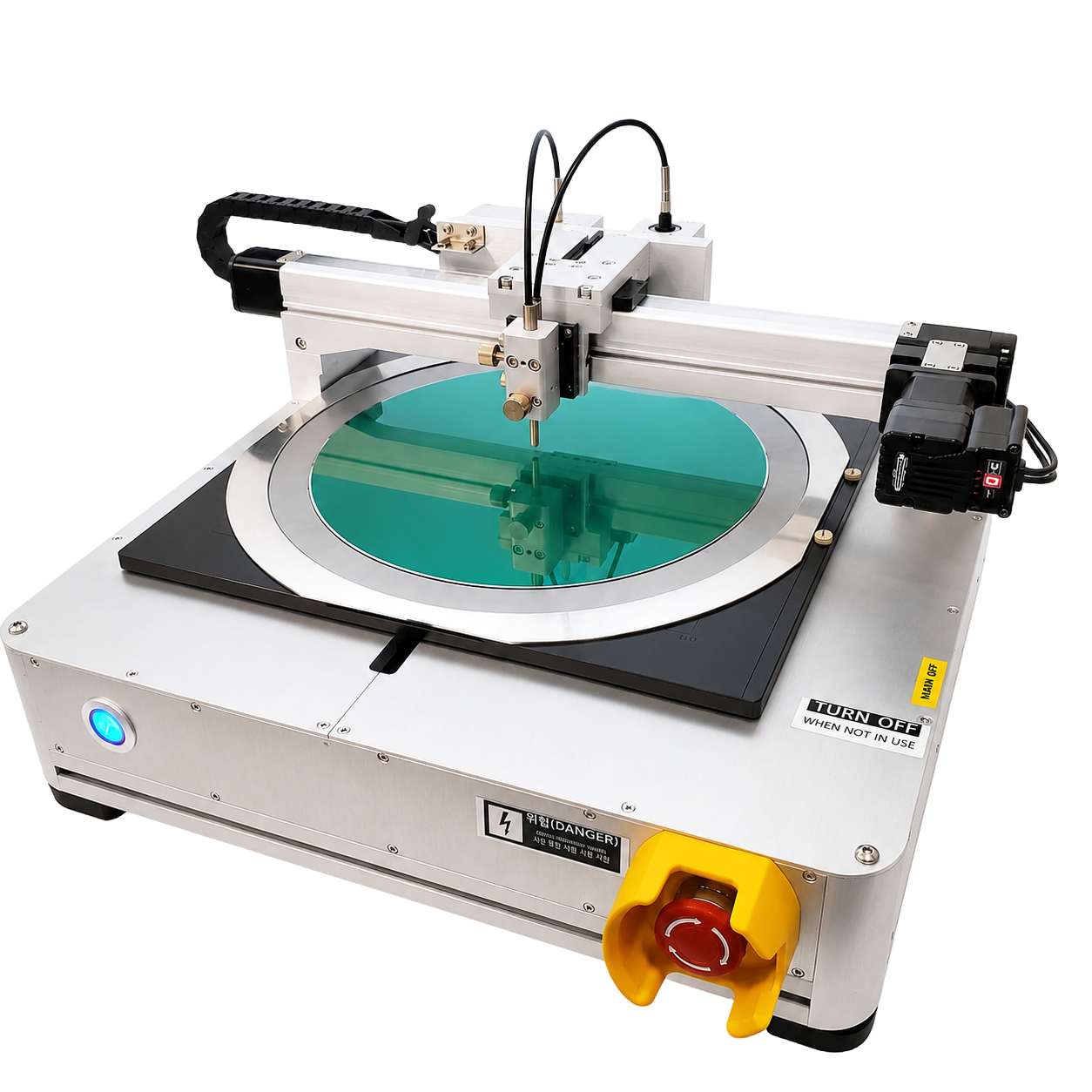
VINE TFM-500 automated thin-film measurement system

About Us

VINE is a measurement solutions company established in 2011.

We develop and supply thin-film thickness measurement systems, compact spectrometers, optical fibers and probes, and measurement software.

Our experience covers the full measurement system, from optical component configuration and spectral acquisition to reflectance measurement, material-data management, thickness analysis, and software operation.

Based on this experience, VINE develops products in which the optical system, signal acquisition, analysis methods, and software operate as one connected measurement workflow.

We also configure measurement systems and software for each customer’s sample and measurement objectives.

What We Do

VINE provides products and technical solutions across four focused measurement areas.

THIN-FILM MEASUREMENT

Thickness measurement systems and workflows

We develop reflectance-based thin-film thickness measurement systems and software workflows for laboratory measurement, automated mapping, contact-style measurement, and external system integration.

Our work includes measurement recipes, optical material data, film-stack configuration, thickness fitting, result review, statistics, and measurement data management.

MODULAR SPECTROMETRY

Compact spectrometers for application requirements

We provide compact spectrometers for a range of wavelength, resolution, sensitivity, cooling, and signal-acquisition requirements.

Spectrometer selection is considered together with the light source, optical fiber, probe, integration time, detector response, and intended measurement application.

OPTICAL FIBERS AND PROBES

Optical delivery and signal collection

We provide optical fibers, fiber bundles, and measurement probes for illumination and signal collection.

Fiber and probe configurations are selected by considering wavelength transmission, numerical aperture, core size, spot size, measurement distance, access conditions, and optical geometry.

MEASUREMENT SOFTWARE

Software for acquisition, analysis, and review

We plan and develop software for spectrum acquisition, reference and dark measurement, recipe management, thin-film analysis, mapping, result review, data export, and external communication.

Our focus is to make measurement conditions, acquired data, analysis settings, and final results easier to understand, manage, and review.

Our Approach

We approach measurement products as complete systems rather than as separate hardware and software components.

01

Understand the complete measurement path

We consider the full path from the light source and optical fiber to the probe, sample, spectrometer, detector signal, and acquired spectrum.

Understanding this path helps us evaluate how optical configuration and acquisition conditions influence signal quality and measurement stability.

02

Connect measurement data and analysis

A thickness result depends not only on the measured spectrum, but also on the wavelength range, material data, film-stack assumptions, substrate conditions, fitting parameters, and analysis model.

We consider measurement data and analysis conditions together when developing workflows and reviewing results.

03

Develop around practical use

Measurement performance is important, but a practical system must also support setup, calibration, recipe preparation, repeated measurement, mapping, data storage, result comparison, and system integration.

VINE incorporates these practical operating requirements into product and software design.

04

Improve through field experience

Customer requirements and field feedback provide important direction for product planning and software development.

We continue to improve measurement workflows by reviewing actual applications, usability, measurement conditions, and the information users need when evaluating results.